As we approach 2025, the job market is set for a significant shift. Links International’s Recruitment Team has observed that we will anticipate a rise in contract hiring and a sustained trend of organisational restructuring.
In the life science and healthcare sector, the stage is set for transformative change driven by rapid technological advancements, shifting patient expectations, and increasingly intricate regulatory demands. The industry is on the brink of major developments, from breakthroughs in personalised medicine to the rising influence of digital health solutions. The coming year promises to redefine how healthcare is delivered and experienced globally.
Below, we explore the key trends and innovations that will shape 2025, shedding light on both the opportunities and challenges that await this dynamic industry. We turn to our Associate Director of Life Science and Healthcare, Michael Chu, carrying over 10 years of experience in the market, as he shares his predictions for the year ahead.
Q: What are the most significant trends you foresee in 2025 for Life Science and Healthcare?
Michael shares that there are 4 pillars of trends for the next year, as follows:
- Hybrid working remains the standard – but return-to-office gains traction
Remote and hybrid work models have become the norm, with 73% of employees working in hybrid roles, 15% fully remote, and only 12% fully in-office. Despite this, many organisations are pushing for a return to office (RTO), with 90% anticipated to have RTO policies in place by the end of 2024.
In the Life Sciences industry, expectations for changes in workplace flexibility are more moderate. According to Deloitte’s 2024 Global Life Sciences Sector Outlook, 76% foresee no change, 3% anticipate more flexibility, and 16% expect reduced flexibility in 2024.
Striking a balance will be crucial as employers aim to bring more staff back to the office while still offering the flexibility that many workers now expect and value.
- The pressure to do more with less intensifies
Life Science leaders are anticipated to prioritise increasing productivity per employee, which could lead to higher turnover rates. Employers are expected to be more selective in their hiring processes, raising standards and favouring candidates with versatile skill sets to maximise efficiency and overall productivity.
- The Wake of Downsizing in Pharmaceuticals
While leaders recognise that downsizing may be necessary for an organisation’s long-term survival, they must also consider its potential impact on their talent brand and employee engagement. Downsizing can create perceptions of instability, making it harder to attract new talent and can diminish the morale and engagement of remaining employees.
Pharmaceutical companies are increasingly focused on rebuilding their talent brands and company culture through various initiatives, with many turning to outplacement services to support affected employees.
In February 2024, The Economic Times (India Times) reported that industries such as technology, IT, ITeS, e-commerce, startups, pharma and healthcare, BFSI, and retail are among those leveraging outplacement providers to assist impacted employees.
Download our Outplacement Guide to learn more about how outplacement services can help you be a better employer.
- Salaries Stagnate Overall – But Not for All
Recruiters have noted a slowdown and stabilisation in the significant compensation increases previously seen across the industry. Some companies are shifting towards hiring more entry-level talent.
However, for specialised roles in areas like personalised medicine and oncology, salaries are expected to keep rising. In contrast, for less specialised positions with larger talent pools, salary growth is likely to plateau.
Q: How do you see the healthcare and life sciences workforce evolving, and what should companies do now to prepare for these changes?
Michael emphasises that contract hiring will be increasingly vital in the Life Science and Healthcare industry. Currently, in Asia, permanent hires significantly outnumber contract hires at a ratio of 9:1. However, this gap is projected to close in the coming years.
In contrast, the US already exhibits a more balanced approach, with 70% of hires being permanent and 30% being contract roles.
Q: In which Asian locations do you see potential growth in Life Science?
Michael observes, “The Life Science sector is experiencing significant growth in both Singapore and Malaysia. Singapore, in particular, has seen a rise in hiring for roles in Research & Development, Pharmaceutical Manufacturing, and Regional Leadership.” He explains that companies are expanding their operations and relocating headquarters to the Garden City, drawn by strong policies, robust government support, a thriving talent ecosystem, and funding opportunities for life science and healthcare initiatives.
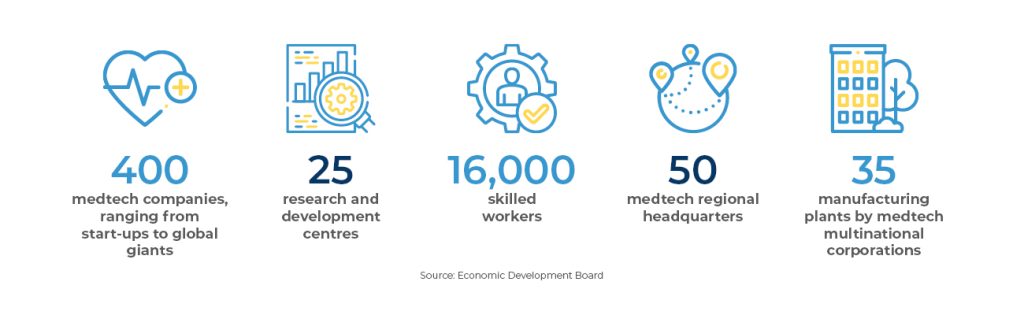
The KPMG report, “Site Selection for Life Sciences Companies,” highlights that an increasing number of foreign multinational corporations are choosing Singapore as their regional or global headquarters for pharmaceutical operations. The Economic Development Board shows that Singapore’s medical technology sector is flying high:
Q: How is the focus on R&D influencing employment trends in the industry?
“Organisations that actively and heavily invest in R&D are often seen as market leaders, as it’s crucial for both product and job development. However, the main challenge many companies face today is managing their budget,” Michael explains.
The Life Science industry is on the brink of significant change as it adapts to evolving market dynamics and technological advancements. While we can expect increased hiring in high-demand areas like R&D, personalised medicine, and leadership roles, companies are becoming more selective, seeking candidates with versatile skill sets to optimise productivity.
At the same time, the industry is mindful of the challenges that come with restructuring and downsizing. To manage these transitions effectively, many organisations are investing in outplacement services to support departing employees while safeguarding their talent brand and maintaining employee morale. As we move forward, the balance between growth, flexibility, and thoughtful workforce management will define the industry’s trajectory.
Whether you’re interested in expanding or restructuring your team, our experienced recruiters are here to help you out. Contact us today to learn more about the services we offer!